
Contents
Water damage can be devastating, yet swift action can turn a chaotic situation into a manageable one. When faced with such an incident, knowing how to navigate insurance claims is essential. From evaluating the damage to understanding your policy coverage, each step plays an important role in your recovery. What you do in the first moments can greatly impact your claim’s outcome, and it’s critical to know exactly what to do next.
Key Takeaways
- Assess and document damage immediately, taking clear photographs from multiple angles for accurate insurance claims.
- Contact your insurance provider promptly to initiate the claims process and keep a detailed record of all communications.
- Mitigate further damage by removing standing water and drying out the area while documenting all actions taken.
- Submit your claim with required documentation, including photos, repair estimates, and receipts, to avoid delays.
- Familiarize yourself with your insurance policy coverage and consider additional options to ensure adequate protection for future incidents.
Assessing the Damage Immediately
When you experience water damage, it’s vital to assess the situation immediately to prevent further issues.
Start with initial assessments by identifying the source of the water. This could be a burst pipe, a leaking roof, or even flooding.
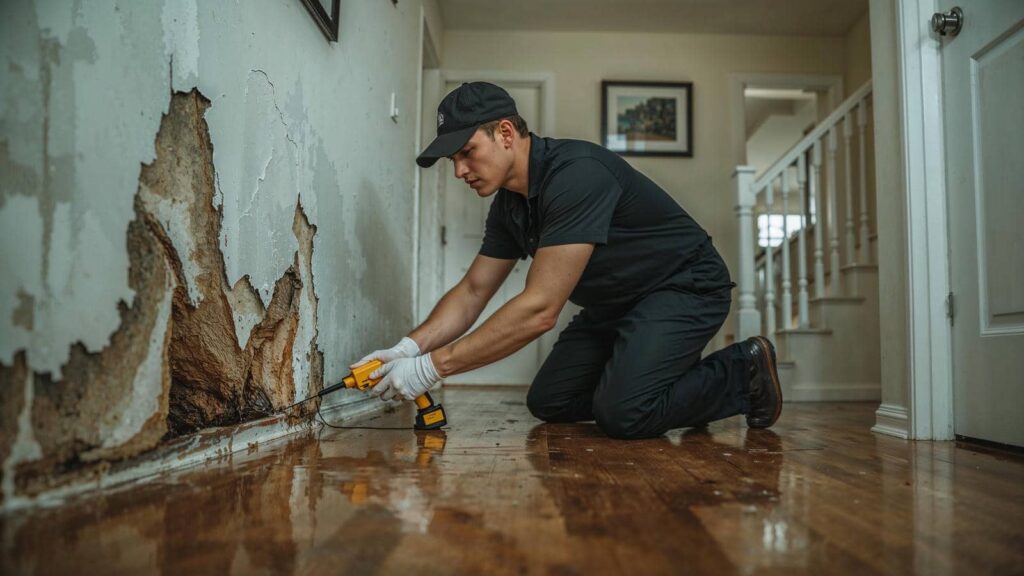
Next, conduct a thorough damage inspection of affected areas, including walls, floors, and personal belongings. Look for signs of mold, warping, or discoloration, as these can indicate the extent of the damage.
Documenting your findings is key for future steps. Be cautious, as some damage may not be visible at first glance.
Prioritize safety; if the area is unsafe, evacuate and wait for professionals.
Documenting the Affected Areas
When documenting the affected areas, you should take clear photographs to capture the extent of the damage.
Additionally, record water levels and note specific locations of damage to provide a thorough overview.
This information will be essential for insurance claims and future repairs.
Take Clear Photographs
How can you effectively document water damage for insurance claims or restoration purposes? Start by taking clear photographs of the affected areas.
Verify you adjust your camera settings to maximize photograph quality; this includes using proper lighting and focus. Capture wide-angle shots to show the extent of the damage, and take close-ups to highlight specific issues like mold or warped materials.
Consider taking multiple angles of the same area for an all-encompassing view. Make sure to include any personal belongings affected by the water, as this adds context to your claim.
Record Water Levels
Recording water levels is essential for evaluating the severity of damage and facilitating effective restoration efforts. Start by employing various recording techniques, such as using a measuring tape or digital tools to document the height of water in affected areas.
Regular water level monitoring helps you identify fluctuations and understand how the situation evolves over time. Make sure to note the highest point reached, as this is significant for your insurance claims.
Take detailed notes on the locations of these measurements, and consider timestamps to track changes accurately. This thorough documentation supports your claim and aids restoration professionals in evaluating the necessary steps for recovery.
Being diligent in this process fosters a sense of community and shared responsibility in restoring affected spaces.
Note Damage Locations
After evaluating water levels, it’s important to identify and document the specific areas that have sustained damage.
Start your damage assessment by systematically walking through your property, noting all affected locations. Use location mapping techniques, such as taking photos or sketching diagrams, to clearly illustrate where the damage occurs.
Be specific—record details like the extent of water intrusion, the types of materials affected, and visible signs of mold or deterioration. This detailed documentation aids in your insurance claim and provides a clear overview for restoration efforts.
Contacting Your Insurance Provider
When faced with water damage, promptly contacting your insurance provider is essential for initiating the claims process and securing the necessary assistance.
Use effective insurance communication strategies to ensure you convey all relevant details about the damage. Be clear and concise, providing information about the extent of the damage and any immediate actions you’ve taken to mitigate it.
Familiarize yourself with your policyholder rights; you deserve a fair assessment and support throughout the process. Keep a record of all conversations and correspondence with your insurer to ensure transparency.
Understanding Your Policy Coverage
Understanding your insurance policy coverage is essential when dealing with water damage.
You’ll want to familiarize yourself with the different types of policies available, as well as common exclusions that may affect your claim.
Additionally, knowing the claims process can streamline your efforts and help you receive the assistance you need more efficiently.
Policy Types Explained
While maneuvering through the complexities of insurance policies, it’s vital to grasp the various types of coverage available for water damage. Generally, your coverage can fall under homeowners’ insurance, renters’ insurance, or specialized policies like flood insurance.
Homeowners’ policies typically cover sudden and accidental damage, but the specifics can vary. Understanding policy types helps you identify your coverage limits, which dictate how much you’ll receive in the event of a claim.
For example, if your policy has a low limit, you might face significant out-of-pocket expenses. It’s essential to carefully read your policy documents and consult with your agent to ensure you have adequate protection against potential water damage incidents.
This knowledge empowers you to make informed decisions when disaster strikes.
Common Exclusions Noted
Although you may think you’re fully covered for water damage, it’s crucial to be aware of common exclusions that can leave you vulnerable. Many policies have specific limitations that create coverage gaps, often without clear communication.
Here are some exclusions to watch out for:
- Flood damage is not covered under standard homeowners’ insurance
- Gradual leaks or maintenance issues
- Sewer backup incidents
- Negligence or lack of upkeep
- Damage caused by natural disasters, like earthquakes
Understanding these exclusions can help you navigate your policy more effectively. Always read the fine print, and consider additional coverage options to fill any gaps.
Being proactive ensures you’re not caught off guard when facing water damage claims.
Claims Process Overview
After identifying potential coverage gaps in your policy, it’s important to familiarize yourself with the claims process for water damage.
Start by gathering all necessary claims documentation, including photos and descriptions of the damage. This evidence supports your case and streamlines the process.
Next, notify your insurance company promptly to initiate your claim. During the insurance negotiation phase, be prepared to discuss your policy details and the extent of the damage. Understanding your coverage helps you advocate effectively for your needs.
Keep detailed records of all communications and decisions made throughout the process. This organized approach ensures you’ll navigate the claims process with confidence and clarity, ultimately fostering a sense of belonging in your community of homeowners.
Mitigating Further Damage
To effectively mitigate further damage from water intrusion, you must act swiftly and strategically. Here are the key steps to follow:
Shut off electrical power to affected areas to prevent electrocution.
Remove standing water through water extraction methods, using pumps or wet vacuums.
Dry out the area by opening windows and using fans or dehumidifiers.
Inspect for mold and moisture-prone areas to ensure mold prevention.
Document everything for your insurance claim, including photos and notes.
Hiring Professional Cleanup Services
When dealing with water damage, you might find that handling the cleanup on your own is overwhelming.
Hiring professional cleanup services can provide you with the expertise needed for a thorough restoration. These specialists conduct a professional assessment to identify the extent of the damage, ensuring no hidden issues remain.
They utilize advanced cleanup techniques, such as industrial-grade dehumidifiers and specialized drying methods, which are more effective than DIY approaches. By relying on professionals, you can save time and reduce the risk of further damage or health hazards.
Plus, their experience with insurance claims can streamline the process for you. Ultimately, choosing professional services can give you peace of mind, knowing your home is in capable hands.
Keeping Receipts and Records
Keeping track of receipts and records is essential in the aftermath of water damage. Proper receipts organization and record maintenance streamlines your recovery process and bolsters your insurance claims.
Here’s what to focus on:
- Document repair and cleanup costs
- Save invoices from service providers
- Keep receipts for materials purchased
- Record communication with your insurance company
- Maintain a timeline of events
Submitting Your Claim Promptly
Submitting your insurance claim promptly is vital to ensure a smooth recovery process after water damage.
Delays can result in complications or even denial of your claim, making it essential to gather and present the required documentation quickly.
Familiarizing yourself with the necessary paperwork will streamline your submission and improve your chances of a favorable outcome.
Importance of Timely Submission
Timely submission of your water damage claim is essential, as delays can jeopardize your chances of receiving adequate compensation. Act swiftly to ensure you meet claim deadlines and initiate a timely response.
Here’s why prompt action matters:
- Insurance policies often have strict time limits.
- Delays can lead to reduced compensation or denial.
- Early submission helps in quicker assessments by adjusters.
- Documenting damages while they’re fresh strengthens your claim.
- A timely response demonstrates your seriousness to the insurer.
Required Documentation Checklist
When you’re faced with water damage, having the right documentation can greatly impact the outcome of your insurance claim. To ensure smooth claim submissions, you’ll want to gather essential documentation types. Here’s a helpful checklist:
| Documentation Type | Purpose |
|---|---|
| Photos of Damage | Visual proof of the extent of damage |
| Repair Estimates | Cost assessments for necessary repairs |
| Receipts for Repairs | Evidence of expenses incurred |
| Insurance Policy | Verification of coverage details |
Collecting these items promptly can streamline your claim process and improve your chances of a favorable outcome. By being thorough and organized, you’re protecting your interests and fostering a sense of community in your recovery efforts.
Following Up on Your Claim Status
How can you effectively keep track of your insurance claim status after experiencing water damage? Staying proactive is key. Regularly following up on your claim ensures you’re informed and can address any issues promptly.
Here are some strategies to reflect on:
Contact your insurance adjuster for direct updates.
Document all communications to maintain a clear record.
Request timelines for expected status updates.
Utilize online portals if your insurer offers them for tracking.
Be persistent but patient; follow up regularly without being pushy.
Tips for Future Prevention
While no one can completely eliminate the risk of water damage, implementing proactive measures can greatly reduce its likelihood and impact. To safeguard your home, prioritize preventive maintenance and conduct regular inspections.
| Action | Frequency | Impact |
|---|---|---|
| Check the roof for leaks | Twice a year | Prevents roof damage |
| Inspect plumbing | Quarterly | Reduces leaks |
| Clean gutters | Bi-annually | Prevents overflow |
| Test the sump pump | Every six months | Ensures functionality |
| Monitor humidity | Monthly | Prevents mold growth |
Building a habit of these practices creates a sense of community and safety within your home. Staying vigilant protects your property and fosters a secure environment for you and your loved ones.
Frequently Asked Questions
What Temporary Repairs Can I Make Before Professionals Arrive?
Before professionals arrive, you can make temporary fixes like sealing leaks with tape, using buckets to catch drips, and positioning fans for airflow. These emergency measures help minimize damage until experts can take over.
How Long Does the Insurance Claim Process Typically Take?
The claim timeline can vary, typically taking weeks to months. Factors like processing delays, documentation, and communication with your insurer affect this duration. Staying proactive and organized can help expedite the process and ease your experience.
Will My Homeowner’s Insurance Cover Mold Remediation?
You might think mold’s a welcome houseguest, but it isn’t. Most homeowner’s insurance policies include mold coverage under specific conditions. Check your policy details; you may find surprising exclusions or limits on remediation costs.
Can I Choose My Own Contractor for the Cleanup?
You can usually choose your own contractor for cleanup, but you should check your insurance guidelines. They might have preferred providers you need to take into account, ensuring the process aligns with your policy’s requirements and coverage.
What if My Claim Is Denied or Underpaid?
If your claim’s denied or underpaid, investigate policy loopholes and consider a claim appeal. Gathering evidence and understanding your rights can empower you to challenge the decision, ensuring you’re treated fairly and receive what you deserve.
Recap
Managing water damage and insurance claims can feel overwhelming, but acting quickly and methodically can make a significant difference in your recovery. You might worry that your efforts won’t be recognized by your insurer, but thorough documentation and prompt communication can counteract that. Remember, the more organized you are, the smoother the process will be. By following these tips, you’re addressing the current issue and safeguarding against future incidents.
Recent Posts
Top Tools for Efficient Home Flood Recovery
When facing home flood recovery, it’s vital to have the right tools at your disposal.
7 Best Tools for Effective Flood Cleanup
When tackling flood cleanup, knowing what tools to use, understanding their purpose, and mastering their
What Are Effective Techniques for Detecting Pipe Leaks?
Detecting pipe leaks is essential for maintaining infrastructure and preventing costly damage. You can utilize