
Contents
When facing home flood recovery, it’s vital to have the right tools at your disposal. Water extraction pumps can efficiently eliminate standing water, while industrial-grade dehumidifiers tackle excess moisture. Air movers enhance the drying process, ensuring that no area is left damp. However, understanding how to effectively use these tools can greatly impact the recovery’s success. What other resources are essential to support your efforts during this challenging time?
Key Takeaways
- Water extraction pumps rapidly remove standing water to minimize damage during flood recovery.
- Industrial-grade dehumidifiers effectively prevent mold growth by extracting high volumes of moisture daily.
- Air movers and fans enhance drying efficiency by improving air circulation and moisture evaporation.
- Moisture meters assess water damage and monitor humidity levels to ensure thorough drying.
- Infrared thermography cameras identify hidden moisture, facilitating quick and accurate recovery assessments.
Water Extraction Pumps
When your home suffers from flooding, using water extraction pumps becomes essential for swift recovery. These pumps effectively remove standing water, minimizing damage and preventing mold growth.
To guarantee peak performance, you must prioritize pump maintenance; regularly inspect hoses, filters, and connections. A well-maintained pump not only extends its lifespan but also boosts your water safety.
Choosing the right pump depends on your specific needs—consider factors like capacity and portability. Familiarize yourself with operating instructions to make sure you’re ready when disaster strikes.
Industrial-Grade Dehumidifiers
When tackling flood recovery, industrial-grade dehumidifiers play an essential role in preventing mold and structural damage.
You’ll want to understand their key features, such as capacity and efficiency, to guarantee you select the right model for your needs.
Additionally, following ideal usage guidelines can maximize their effectiveness in drying out affected areas swiftly.
Key Features Overview
Industrial-grade dehumidifiers are essential tools in flood recovery, designed to tackle high moisture levels effectively.
These machines boast powerful extraction capabilities, often removing up to 30 gallons of water daily, considerably speeding up the drying process. Many models feature adjustable humidity settings, allowing you to customize operations based on your specific needs.
Additionally, built-in sensors can automatically shut off when ideal levels are reached, ensuring energy efficiency. Consider integrating them with community resources, like local rental services, to make recovery more accessible.
If you have flood insurance, check your policy, as some coverage may extend to rental equipment, helping you manage costs efficiently. Investing in the right dehumidifier can make all the difference in your recovery journey.
Optimal Usage Guidelines
To maximize the effectiveness of industrial-grade dehumidifiers during flood recovery, it’s essential to understand their ideal usage guidelines.
Start by placing the units in the most affected areas, ensuring adequate airflow around them. Maintain a consistent humidity level of around 30-50% for peak performance.
Regularly check and empty the water tank to prevent overflow and maintain efficiency. For larger spaces, consider using multiple units to facilitate effective recovery techniques.
Don’t forget to monitor the temperature; warmer air can hold more moisture, enhancing dehumidification.
Finally, combine these peak usage strategies with proper ventilation to expedite drying.
Air Movers and Fans
When recovering from a flood, understanding the types of air movers available is essential for effective drying.
You’ll want to employ proper airflow techniques to maximize efficiency, ensuring that moisture evaporates quickly from surfaces.
Additionally, using dehumidifying fans can greatly enhance the drying process, minimizing the risk of mold and structural damage.
Types of Air Movers
There are several types of air movers available to aid in flood recovery, each designed for specific applications and environments.
You’ll find centrifugal air movers, which create a strong, focused airflow, ideal for drying carpets or walls.
Axial air movers, on the other hand, provide a broader airflow, making them perfect for ventilating large spaces.
Each of these air mover types offers unique benefits, like faster drying times and improved air circulation, which are essential in preventing mold growth.
By selecting the right air mover, you enhance your recovery efforts considerably.
Familiarizing yourself with these options not only empowers you but also fosters a sense of community, as you share your knowledge with others facing similar challenges.
Proper Airflow Techniques
While selecting the right air mover or fan is essential, understanding proper airflow techniques is equally important for effective flood recovery.
You’ll want to focus on creating ideal airflow patterns in your space. Here are some ventilation strategies to enhance your recovery efforts:
- Position air movers to create a circular airflow, minimizing stagnant air.
- Use fans to direct airflow towards wet areas, promoting moisture evaporation.
- Confirm windows and doors are slightly open for cross-ventilation, allowing fresh air in.
- Monitor humidity levels to adjust your airflow methods as needed.
Benefits of Dehumidifying Fans
Dehumidifying fans, often referred to as air movers, play an essential role in flood recovery by effectively reducing moisture levels in your space. Utilizing these fans not only speeds up the drying process but also enhances overall air circulation, preventing mold growth. You’ll appreciate their energy efficiency, which translates into lower utility bills while maximizing dehumidifying benefits.
Here’s a quick comparison of different fan options:
| Fan Type | Fan Efficiency | Dehumidifying Benefits |
|---|---|---|
| High-velocity | Very High | Rapid drying, mold prevention |
| Standard | Moderate | Basic moisture reduction |
| Portable | High | Easy setup, versatile use |
| Industrial | Very High | Large area coverage |
Incorporating air movers into your flood recovery strategy guarantees you’re taking a proactive approach to restoring your home effectively.
Moisture Meters
A moisture meter is an essential tool for evaluating the extent of water damage in your home after a flood. It offers precise moisture detection through various measurement techniques, allowing you to make informed decisions about recovery.
With a moisture meter, you can:
- Identify hidden moisture in walls and floors
- Prevent mold growth by monitoring humidity levels
- Determine the effectiveness of drying equipment
- Track moisture levels over time for thorough assessments
Using this tool not only aids in immediate recovery but also fosters a sense of community responsibility by ensuring your home is safe and sound.
Infrared Thermography Cameras
Infrared thermography cameras serve as a powerful tool in flood recovery, enabling you to visualize temperature differences that indicate hidden moisture or structural damage. By utilizing infrared technology and thermal imaging, you can pinpoint issues that are otherwise invisible to the naked eye, ensuring a thorough assessment of your home.
| Feature | Benefit | Importance |
|---|---|---|
| Non-Destructive Testing | Identify hidden moisture easily | Protects structural integrity |
| Quick Assessment | Save time in recovery efforts | Reduces overall repair costs |
| Easy Visualization | Simplifies damage evaluation | Enhances decision-making |
With these cameras, you empower yourself to make informed decisions, ensuring a complete recovery process that keeps your home safe and sound.
Water-Resistant Cleaning Supplies
When dealing with the aftermath of flooding, using water-resistant cleaning supplies is crucial for effective recovery.
These tools not only help you clean up but also prevent future issues like mold. Here are some key items to take into account:
- Mold-resistant sprays: Target existing mold and prevent new growth.
- Waterproof storage bins: Safeguard your belongings from future water damage.
- Heavy-duty mop and bucket: Guarantee thorough cleaning without wear and tear.
- Durable gloves: Protect your hands while using cleaning agents.
Investing in these supplies can make a significant difference in your recovery process.
Personal Protective Equipment (PPE)
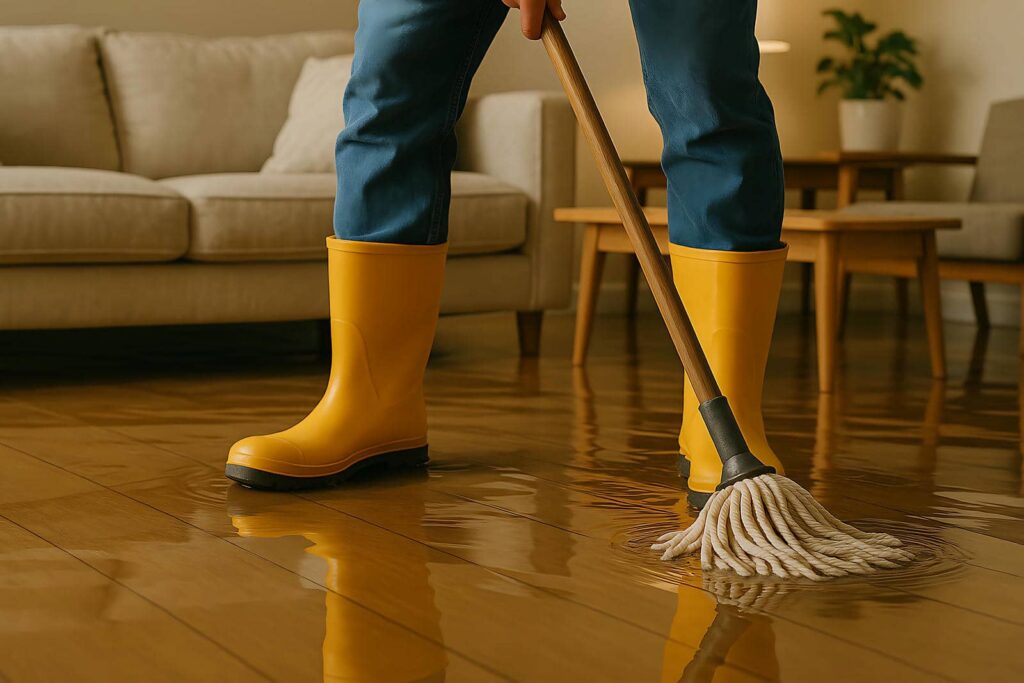
While recovering from a flood, wearing the right Personal Protective Equipment (PPE) is crucial to keep you safe and healthy. Start with sturdy waterproof boots and gloves to protect against contaminants.
When selecting PPE, consider criteria like durability, fit, and comfort—this guarantees you’re not just protected, but also able to move freely. A mask is essential to shield against mold spores, while goggles can protect your eyes from debris.
Remember to follow PPE maintenance tips; clean your gear after every use to maintain its effectiveness and longevity. Storing your equipment properly helps prevent wear and tear, making it ready for future emergencies.
Prioritizing PPE not only safeguards you but fosters a sense of community resilience during recovery efforts.
Flood Barriers and Sandbags
After guaranteeing your safety with proper PPE, it’s time to assess strategies for flood prevention and mitigation. Flood barriers and sandbags are two effective methods to protect your home.
Understanding the right sandbag installation techniques is essential for effectiveness. Here are some key strategies to reflect on:
Choose the right materials: Use heavy-duty sandbags or flood barriers designed for your specific needs.
Create a solid barrier: Stack sandbags in a staggered pattern, guaranteeing they’re tightly packed to prevent water seepage.
Seal the gaps: Use plastic sheeting along with sandbags for extra protection against floodwaters.
Plan ahead: Have your flood prevention strategies ready before a storm hits to guarantee quick deployment.
Frequently Asked Questions
How Do I Choose the Right Water Extraction Pump for My Home?
To choose the right water extraction pump, assess your pump capacity needs based on the flood severity. Consider portable options for easy maneuverability, ensuring you can effectively tackle water removal in hard-to-reach areas.
What Are the Signs of Mold After Flood Damage?
After flood damage, you might notice a musty odor, dark spots, or unusual growths. Using mold identification techniques is essential, as mold poses serious health risks. Don’t wait—address these signs to protect your home and health.
How Long Does Flood Recovery Typically Take?
Flood recovery timelines vary, but you can expect the recovery process duration to last from a few weeks to several months, depending on the severity of the damage and your response efforts. Stay proactive and organized.
Can I Rent Flood Recovery Equipment Instead of Buying?
Just like a sailor steering through stormy seas, you can rent flood recovery equipment instead of buying. This choice saves money and allows you to access the latest tools, ensuring your home’s safe return to dry land.
What Insurance Covers Home Flood Recovery Expenses?
When evaluating flood insurance coverage, check your policy details for recovery cost limits. Many plans cover damages from floods, but understanding these limits guarantees you’re prepared for potential out-of-pocket expenses during recovery efforts.
Wrap-Up
In the wake of a flood, equipping yourself with the right tools is like arming a knight for battle. Water extraction pumps swiftly sweep away the chaos, while industrial-grade dehumidifiers gently cradle the air, banishing moisture. Air movers stir the atmosphere, fostering a dry refuge, while moisture meters and infrared cameras reveal hidden threats. With water-resistant supplies and PPE, you’ll be ready to conquer the aftermath. By harnessing these essential tools, you’ll restore your home and reclaim your sanctuary.
Recent Posts
7 Best Tools for Effective Flood Cleanup
When tackling flood cleanup, knowing what tools to use, understanding their purpose, and mastering their
What Are Effective Techniques for Detecting Pipe Leaks?
Detecting pipe leaks is essential for maintaining infrastructure and preventing costly damage. You can utilize
Why Use Effective Techniques for Pipe Leak Detection?
When it comes to maintaining plumbing integrity, timely pipe leak detection is essential. You might