
Contents
Imagine standing in a room with water pooling around your ankles, the lingering smell of dampness filling the air. Quick action is crucial to mitigate damage after a flood. You’ll need to assess hazards, gather the right tools, and remove standing water efficiently. But how do you ensure you’re cleaning up, and preventing future issues? Let’s explore essential tips for effective emergency water removal.
Key Takeaways
- Conduct a safety assessment to identify hazards like downed power lines and unstable structures before starting water removal.
- Use submersible or utility water pumps for efficient removal of large volumes of standing water.
- Employ wet/dry vacuums for smaller areas and siphon hoses for tight spaces to effectively extract water.
- Open windows and use fans for airflow, and dehumidifiers to aid in drying out affected areas.
- Remove wet materials like carpets and rugs promptly to prevent mold growth and further damage.
Assessing the Situation and Safety Precautions
Before you plunge into emergency water removal, it’s crucial to assess the situation and prioritize safety.
Start with a thorough safety assessment; check for hazards like downed power lines, unstable structures, or contaminated water. If you spot any dangers, don’t hesitate to call for professional help. Your well-being matters more than anything.
Next, consider risk management. Identify areas with the most water and evaluate how severe the damage is. This’ll help you develop a clear plan of action.
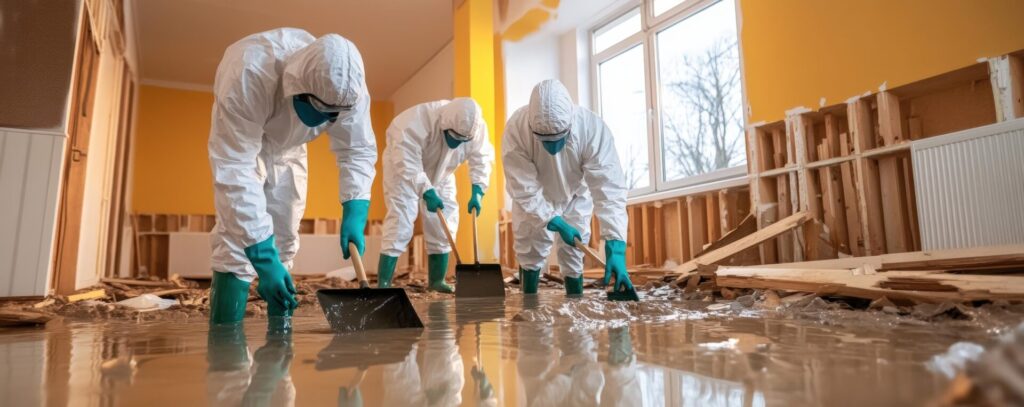
Make sure to wear protective gear, like gloves and boots, to shield yourself from potential contaminants.
Lastly, communicate with others in your area; they may have insights that can aid your efforts or alert you to risks you hadn’t noticed.
Gathering Essential Tools and Equipment
Gathering the right tools and equipment is essential for effective water removal. Having the right gear on hand will help you tackle the situation efficiently and safely.
Here’s a list of must-have items to keep in your emergency kit:
Water pumps: Choose submersible or utility pumps for quick water removal.
Extraction tools: Look for wet/dry vacuums or specialized extraction units to handle smaller areas.
Siphon hoses: These are handy for draining water from tight spaces.
Buckets: Simple yet effective for manual water removal and debris collection.
Protective gear: Safety gloves, boots, and masks will safeguard you from contaminants.
Removing Standing Water Effectively
Once you’ve assembled your essential tools, it’s time to tackle standing water efficiently. Start by identifying the areas with the most accumulation.
For smaller puddles, use a wet/dry vacuum to suction out the water. This method is quick and effective, allowing you to remove standing water without much effort. For larger areas, consider using a pump for faster removal. Make certain to position it correctly to maximize efficiency.
If you face stubborn water in hard-to-reach spots, employ removal techniques like mops or towels as a backup. Once the majority is gone, check for hidden pockets of moisture.
Remember, removing standing water isn’t just about the visible areas; it’s essential to ensure no residual water remains to prevent mold growth.
Stay focused and methodical, and you’ll restore your space effectively. Your efforts are significant to reclaiming a safe and welcoming environment for you and your loved ones.
Drying and Dehumidifying Affected Areas
To effectively dry and dehumidify affected areas, start by opening windows and doors to promote airflow. This initial step is vital, as it aids in reducing humidity levels.
Next, utilize dehumidification techniques to expedite the drying process. Here’s a quick guide to help you:
- Use fans to circulate air and increase evaporation.
- Employ dehumidifiers to draw moisture from the air.
- Check for moisture detection with a moisture meter to ensure thorough drying.
- Remove wet carpets and rugs to avoid mold growth.
- Inspect walls and ceilings for dampness; treat as necessary.
Preventing Future Water Damage
After successfully drying and dehumidifying your space, it’s important to take proactive steps to prevent future water damage.
First, consider implementing effective waterproofing techniques for your home. Seal cracks in your foundation and apply waterproof coatings to walls. These measures create a barrier against moisture intrusion.
Next, invest in proper drainage solutions. Ensure gutters and downspouts direct water away from your foundation. Installing a French drain or sump pump can help manage excess water during heavy rains, reducing flood risks.
Regularly inspect your plumbing for leaks, and maintain your roof to prevent water pooling.
By staying vigilant and addressing potential issues early, you can protect your home and loved ones from the devastating effects of water damage.
Review
Acting swiftly after a flood can make all the difference in saving your home from disaster. By evaluating hazards, using the right tools, and thoroughly drying out affected areas, you’re cleaning up—you’re fortifying your space against future water damage like a fortress against a relentless tide. Remember, prevention is key, so take the steps necessary to safeguard your home against the next storm. Stay vigilant, and your efforts will pay off in the long run.
Recent Posts
Top Tools for Efficient Home Flood Recovery
When facing home flood recovery, it’s vital to have the right tools at your disposal.
7 Best Tools for Effective Flood Cleanup
When tackling flood cleanup, knowing what tools to use, understanding their purpose, and mastering their
What Are Effective Techniques for Detecting Pipe Leaks?
Detecting pipe leaks is essential for maintaining infrastructure and preventing costly damage. You can utilize